
How to Create a Cohesive Home Without Using the Same Wallpaper Everywhere
A cohesive home does not require the same wallpaper in every room. In fact, repeating one pattern throughout the house can make an interior feel predictable rather than thoughtfully designed. The key is to create visual connections between rooms through colour, scale, texture and style while allowing each space to have its own personality. With the right approach to wallpaper design, different rooms can feel connected without looking identical.
Build a Visual Connection Through Colour and Style
A cohesive home begins with a clear relationship between the colours and design styles used throughout the property. This does not mean choosing one wallpaper and repeating it from room to room. Instead, related colours, complementary tones and a consistent overall mood can create a natural visual connection between different spaces.
Choose a Colour Story Rather Than One Repeated Colour
One of the simplest ways to connect different wallpaper designs is to establish a colour story for the home. This might involve warm neutrals, earthy greens, soft blues, muted terracotta or a combination of tones that appear in different forms throughout the property.
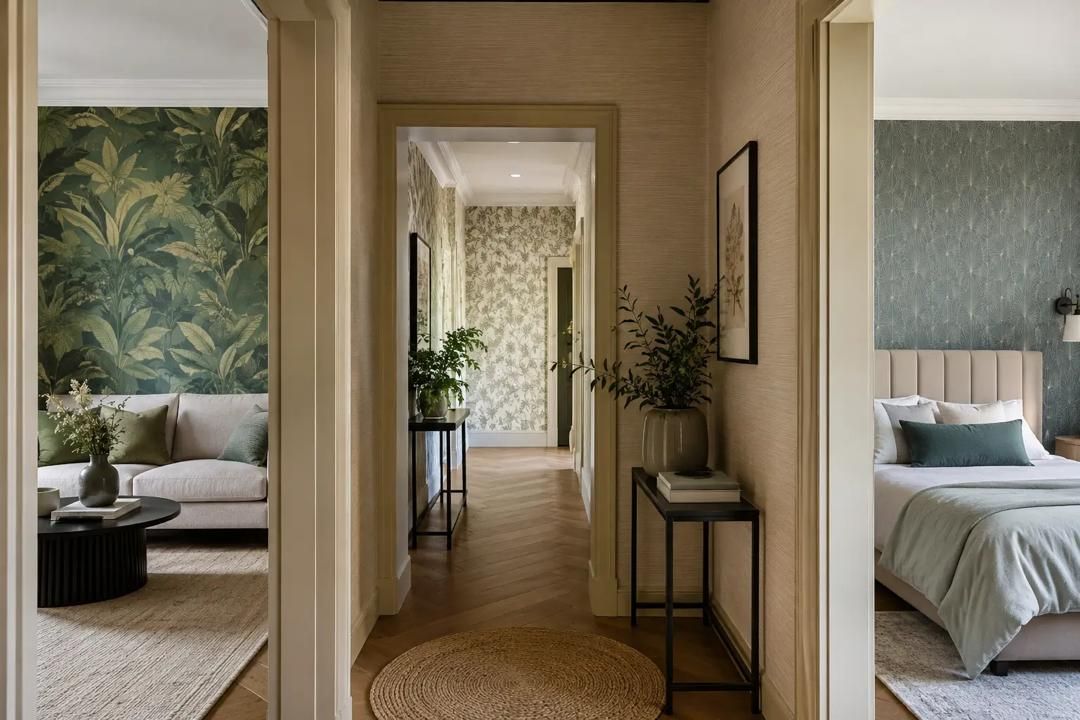
For example, a living room could feature wallpaper with a deep green botanical pattern, while a hallway uses a smaller geometric design that includes a similar green alongside cream and natural beige. A bedroom might then use a softer wallpaper with muted green and warm neutral tones. The patterns are different, but the shared colour relationship helps the rooms feel connected.
The same principle works with more dramatic interiors. If one room features navy wallpaper, other areas do not need to use navy walls. Instead, navy could appear in smaller amounts through a pattern, border, artwork or accent furnishings. This creates continuity without making every room look like a copy of the last.
The goal is to create repetition without duplication. When colours appear across several spaces in different proportions, the home can feel deliberately designed while still allowing each room to have its own identity.
Keep the Overall Design Mood Consistent
Colour is important, but it is not the only element that creates cohesion. The overall mood of the wallpaper should also relate to the character of the home and the way rooms connect with one another.
A home built around a relaxed, natural aesthetic may use botanical prints, organic textures and soft colours in different rooms. A contemporary home might combine abstract patterns, structured geometric designs and subtle textured wallpapers. A more traditional property could connect classic motifs, understated florals and refined patterns without using the same design repeatedly.
This does not mean every wallpaper needs to belong to the same design category. Contrasting styles can work well when they share a common level of formality or a similar visual atmosphere. A bold contemporary mural may sit comfortably alongside a subtle textured wallpaper if the surrounding furnishings, colours and architectural details create a clear relationship between them.
Use Pattern, Scale and Texture to Give Each Room Its Own Character
Once the overall colour and mood have been established, different wallpaper patterns can be used to create variety throughout the home. Pattern scale, texture and placement all influence how a room feels and how it relates to the spaces around it. Thoughtful variation prevents a home from becoming repetitive while maintaining a strong design connection.
Vary Pattern Scale Between Connected Spaces
Using the same size of pattern in every room can make a home feel visually flat. Varying the scale creates contrast and helps each space feel appropriate to its size and purpose.
A large-scale pattern can create a strong statement in a spacious living room or dining area. In a smaller hallway, a more delicate pattern may provide interest without overwhelming the available space. A bedroom might use a medium-scale design that creates atmosphere without competing with furniture and other decorative elements.
The important consideration is how neighbouring rooms relate to each other. If two spaces are visible from one another, choosing patterns with different scales can create interest while maintaining a connection through colour or style.
For example, a large botanical design in an open-plan living area could be balanced by a smaller leaf pattern in an adjoining hallway. The two wallpapers are not identical, but the relationship between their themes and colours creates a subtle transition.
Let Texture Connect Different Patterns
Texture is another useful way to create a cohesive interior. Two wallpapers can look completely different in pattern but still work together because they share a similar tactile quality or finish.
A textured grasscloth-style wallcovering may complement a printed wallpaper with natural tones. A subtle linen-effect design may work alongside a more decorative pattern because both provide a soft, refined appearance. In a contemporary home, a plain textured wallpaper can provide a visual pause between two stronger patterns.
Use Feature Walls With Intention
A feature wall can be an effective way to introduce a distinctive wallpaper without requiring the same design throughout an entire room. However, its position should be considered carefully.
The best feature wall is often one that naturally attracts attention. This might be behind a bedhead, a television unit, a dining table or a key architectural feature. The wallpaper should support the room rather than appear randomly placed.
A bold feature wall can also influence the wallpaper choices in nearby spaces. If it contains several colours, those colours can inspire softer or more restrained choices elsewhere in the home. This allows the feature wall to become part of a wider design scheme rather than an isolated statement.
Professional wallpaper installation is especially important when a design has a large pattern or requires precise alignment. Poorly matched seams can interrupt the visual effect and make an otherwise carefully planned interior look unfinished.
Plan the Transition Between Rooms for a More Natural Result
The way one room leads into another can determine whether different wallpaper designs feel connected or disjointed. Transitions are particularly important in hallways, open-plan layouts and homes where several wallpapered areas can be seen at the same time. Careful planning allows variety while maintaining a sense of flow.
Consider What Can Be Seen From Each Room
Wallpaper should not always be selected room by room in isolation. A design that looks excellent on its own may clash with another wallpaper that can be seen through a doorway or across an open-plan area.
Before making a final decision, consider the views between spaces. If a hallway leads directly into a living room, the colours and visual intensity of both designs should work together. If a staircase connects several levels, it may be useful to choose a more neutral design for the transition area so that stronger patterns can be used in individual rooms.
Consider the Home as a Complete Interior
The most successful wallpaper ideas for home interiors usually begin with the property as a whole rather than a single room. Existing flooring, cabinetry, curtains, furniture, artwork and natural light should all influence the design choices.
A wallpaper that looks soft and understated in a bright room may appear much richer in a darker space. Similarly, a pattern that works beautifully with timber flooring may feel different alongside polished concrete or dark tiles.
Planning the interior as a complete environment makes it easier to choose wallpapers that complement one another. It also reduces the risk of making expensive design decisions that later feel disconnected from the rest of the home.
Professional Installation Helps Bring the Design Together
Even the best wallpaper design can lose its impact if the installation is uneven, poorly aligned or affected by visible seams. Surface preparation, accurate measuring and careful pattern matching all contribute to the final appearance.
A professional installer can help ensure that each design is presented properly while maintaining consistency across the wider home. This is especially important when different wallpapers are being used because the quality of each installation contributes to the overall sense of cohesion.
Conclusion
Creating a cohesive home does not mean using the same wallpaper everywhere. A more considered approach combines related colours, complementary design moods, varied pattern scales and different textures to create connections between rooms. Feature walls and carefully selected wallpaper designs can give each space its own personality while still making the whole property feel unified.
The most successful result comes from considering the home as one connected interior rather than making isolated choices for individual rooms. By planning how wallpapers relate to existing décor, natural light, room transitions and each other, homeowners can create a design that feels balanced and personal. Professional advice and precise wallpaper installation can then help bring that vision together with a polished, lasting finish.
About The Wallpaper Guy
The Wallpaper Guy provides professional wallpaper installation, wallpaper removal, maintenance and repairs, mural wallpapering, bespoke wallpaper services and consultation support for residential and commercial properties throughout Sydney and surrounding areas. Operating from Sydney’s Northern Beaches and servicing locations across the wider Sydney region, the business brings decades of wallpapering experience to projects ranging from individual feature walls and bedrooms to larger commercial interiors.
How to Create a Cohesive Home Without Using the Same Wallpaper Everywhere
August 5, 2026